
Real Service Calls
Appliance Repair, Installation and Service Gallery
Explore examples of appliance problems, safety concerns, installation issues, and completed work encountered during real Knapp's service calls. These photographs help explain common appliance failures and the importance of proper service and installation.
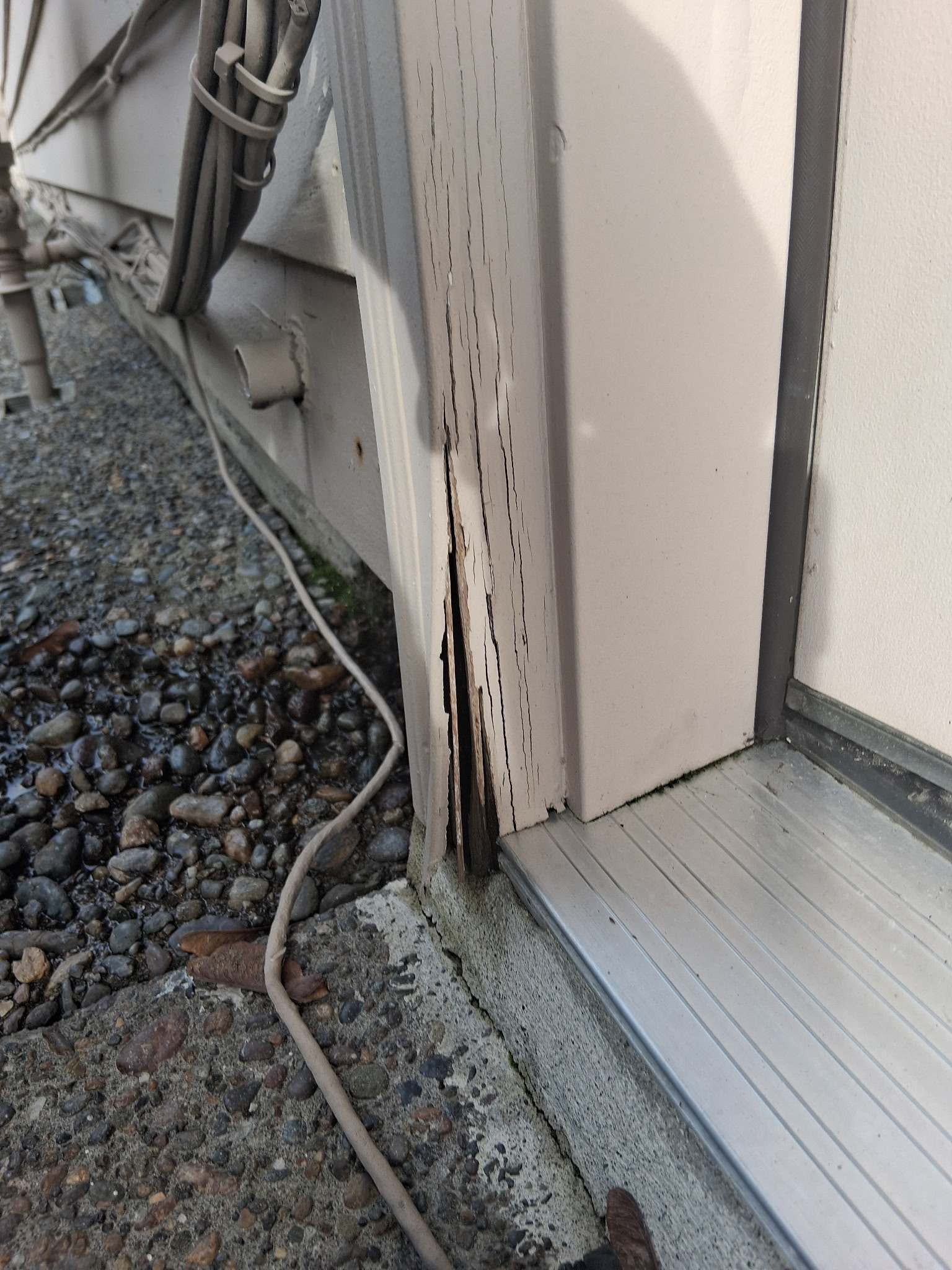
Rotted wood door trim
Problem found: Wood door trim has rotted through from long-term moisture exposure.
Why it matters: Rotted wood loses structural strength, no longer supports fasteners, and lets moisture keep spreading into the surrounding framing and trim. It needs to be cut out and replaced.
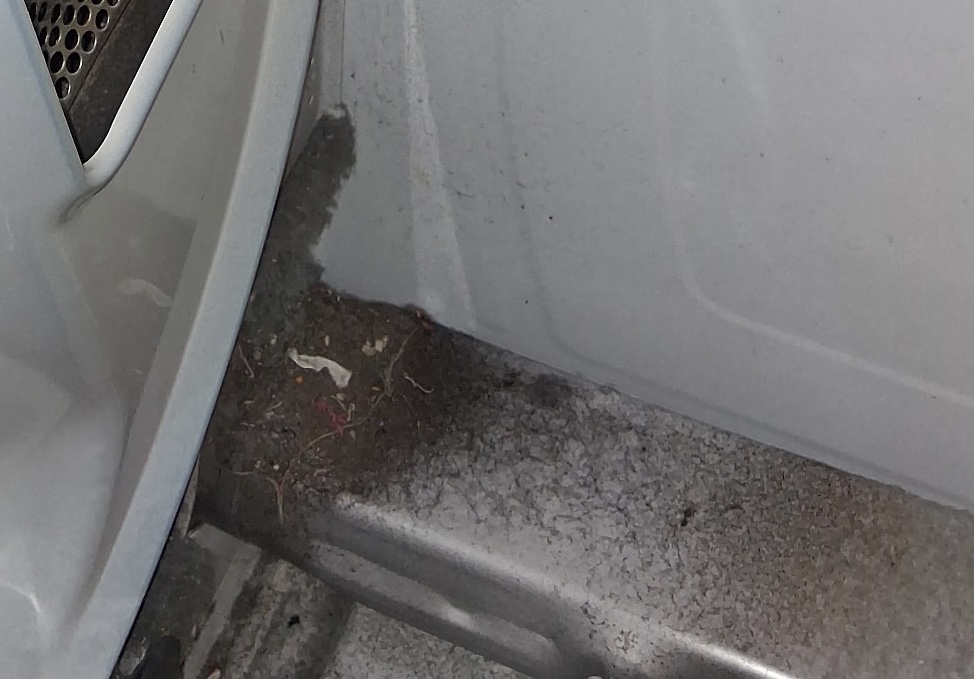
Lint buildup on dryer heating element
Problem found: Heavy lint accumulation found directly on the dryer heating element during service.
Why it matters: Lint sitting on a live heating element is a fire hazard — it can ignite from the element's operating temperature. The heater assembly and surrounding housing must be fully cleaned before the dryer is returned to service.
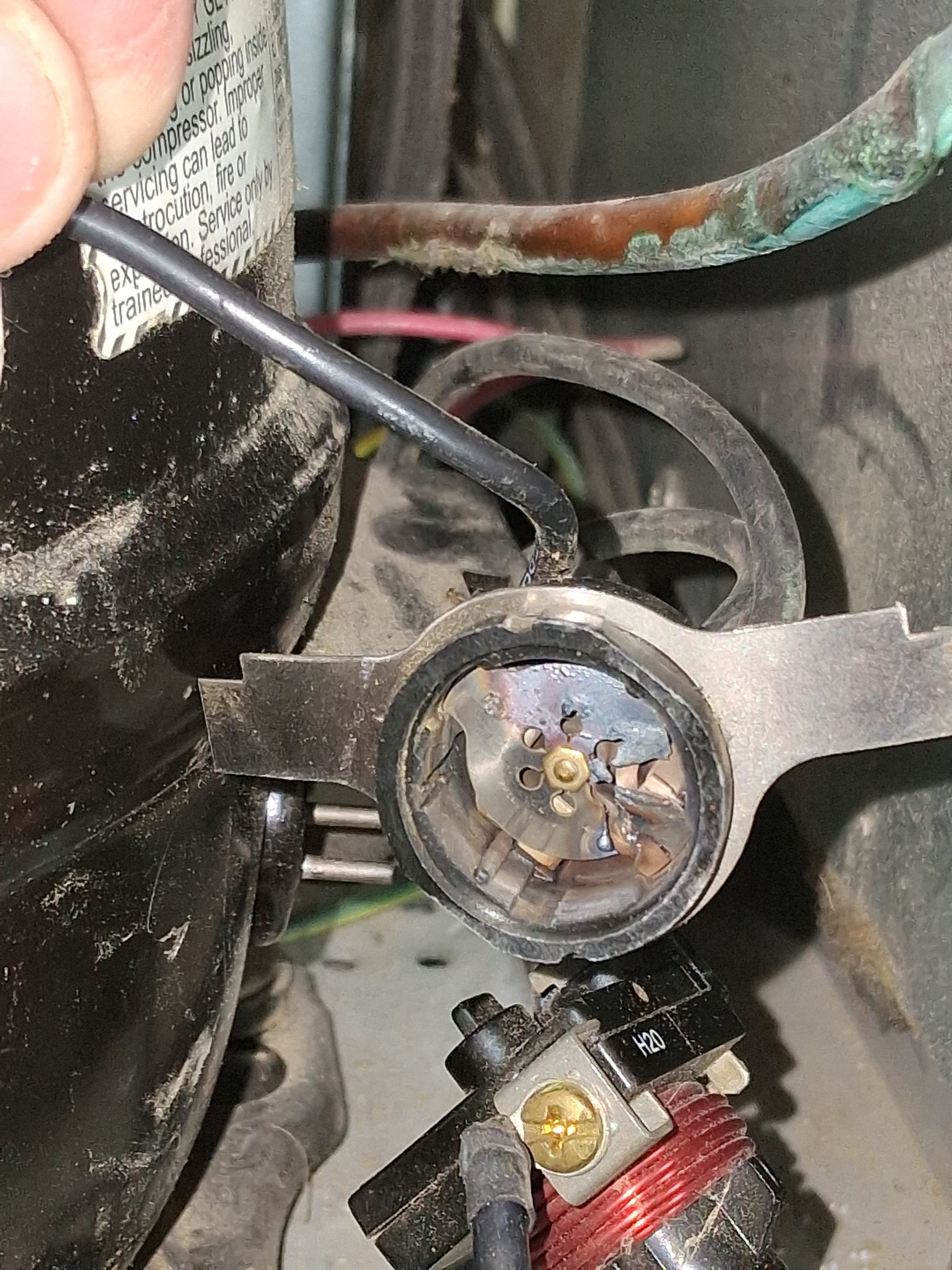
Melted refrigerator compressor start relay
Problem found: Internal components of the compressor start relay have overheated and melted.
Why it matters: A melted start relay indicates sustained overheating at an energized component — a real fire risk inside the appliance. The relay must be replaced and the compressor circuit verified before the refrigerator is safe to run.
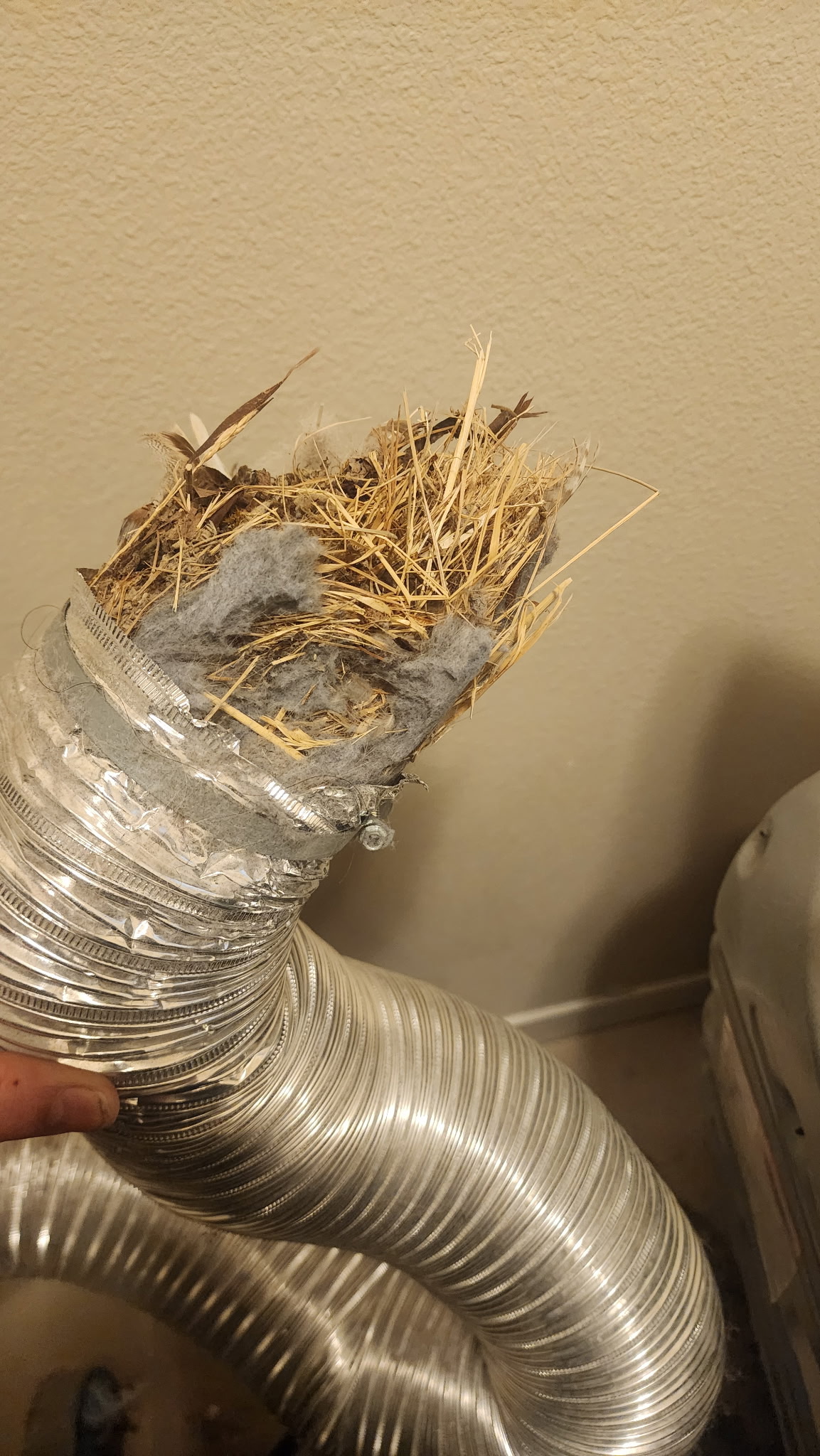
Clogged dryer vent hose
Problem found: Dryer vent hose packed with lint, restricting airflow out of the dryer.
Why it matters: Clogged venting causes longer dry times, higher energy use, and — because heat and lint stay trapped in the system — significantly increases the risk of a dryer fire. Vents should be cleaned regularly and inspected end-to-end.
Work performed: To keep wildlife from nesting in the termination, use an exterior decorative vent cover designed to block birds and rodents while still allowing full airflow.
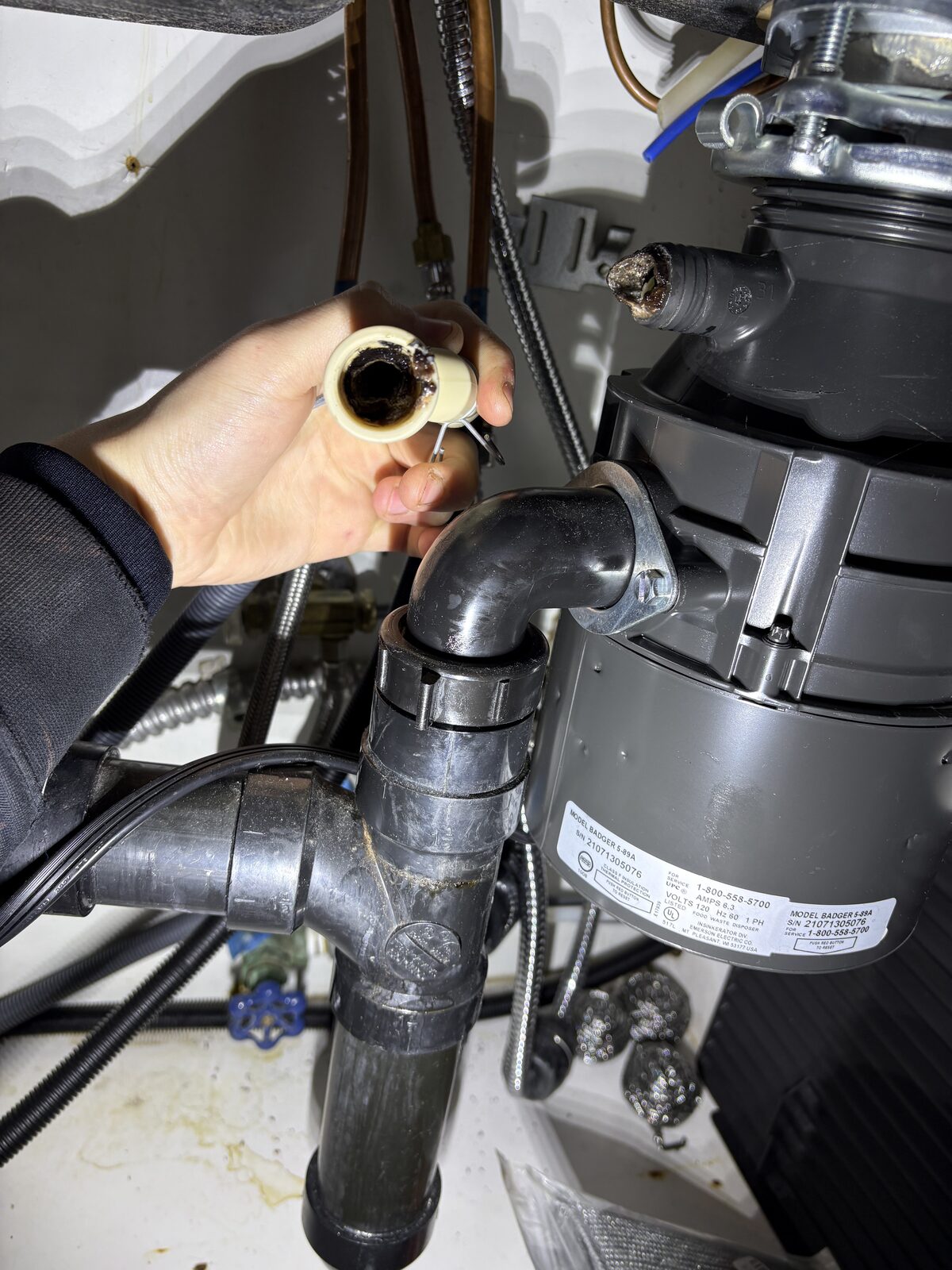
Dishwasher drain line packed with debris
Problem found: Dishwasher drain line found packed with food debris, preventing the dishwasher from draining.
Why it matters: A blocked drain line leaves standing water in the tub, causes odor, and can back up into the sink or garbage disposal. Clearing the line restores drainage without needing to replace parts.
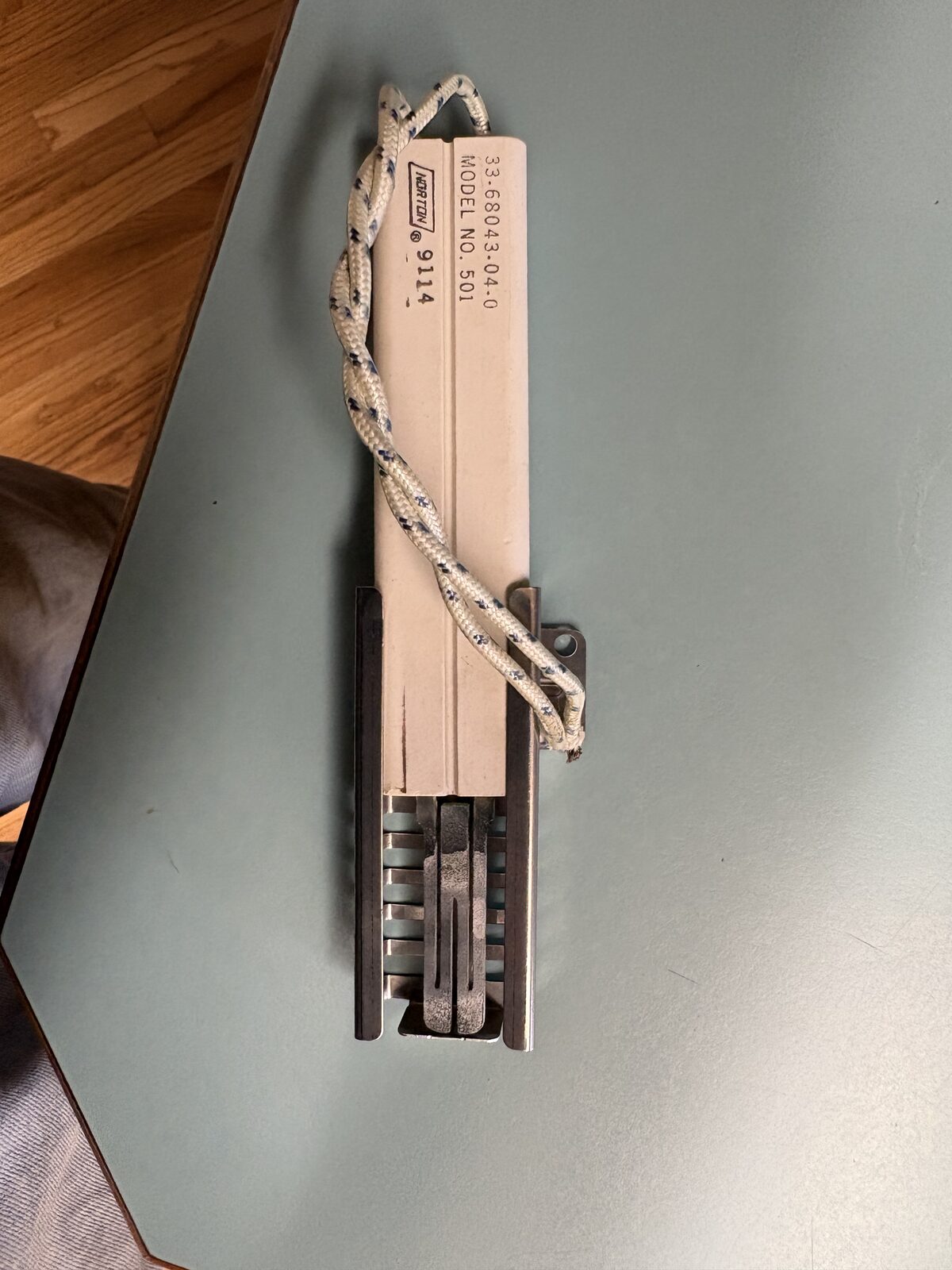
Worn oven ignitor — chalky white glow bar
Problem found: Oven ignitor is no longer lighting the burner. The glow bar has turned a chalky white — a clear sign the ignitor is at end of life.
Why it matters: A weak ignitor can still glow but no longer draw enough current to open the gas valve, so the oven never lights or takes far too long to heat. Replacing the ignitor at the first chalky-white sign restores safe, reliable ignition.
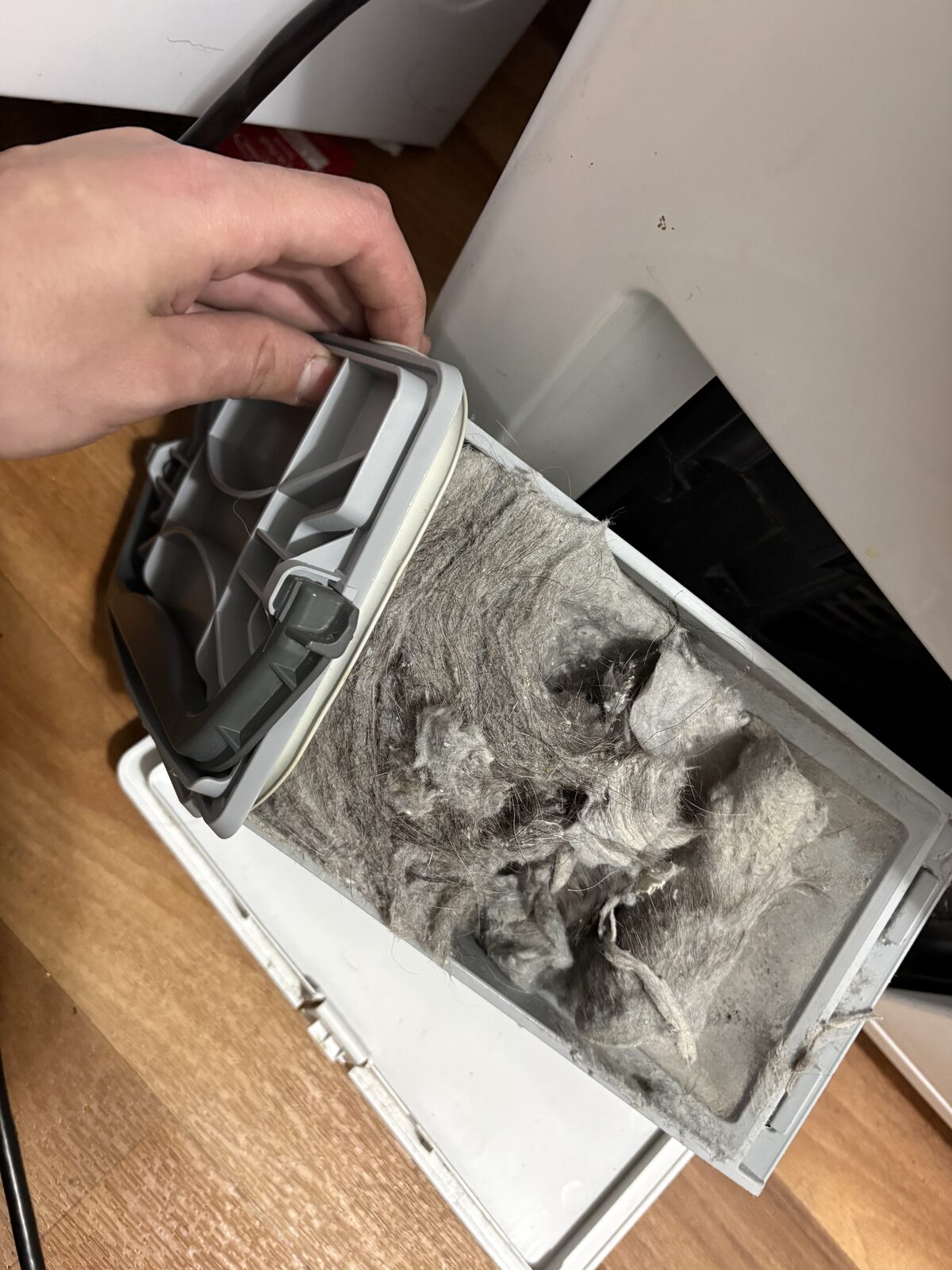
Ventless dryer lint filter — deep-clean interval
Problem found: Ventless dryer lint filter and internal lint pathways loaded with buildup, reducing airflow and drying performance.
Why it matters: Ventless dryers trap lint internally instead of exhausting it outside. The lint trap should be cleaned every load, and the machine should be pulled apart and deep-cleaned roughly every 6 months so airflow, the condenser, and the heat exchanger stay clear.
Work performed: Recommended maintenance: clean the lint filter every load; schedule a full internal deep-clean about every 6 months to keep drying times, energy use, and component life on track.
 before
Worn agitator dogs vs. new replacements
Problem found: The plastic agitator dogs in a top-load washer deteriorated from use and age. Worn down, they could no longer grab the center post, so the agitator stopped agitating and the washer wasn't cleaning clothes.
Why it matters: Agitator dogs are a wear item. When they round off, the washer still runs and sounds normal but the agitator just spins freely instead of driving the load. Replacing the dogs restores full wash action without replacing the transmission.
Work performed: Old worn dogs removed and shown next to the new black replacement set that was installed.
 before
Broken dryer blower wheel vs. new wheel
Problem found: The fins on the dryer blower wheel broke off, leaving the wheel unbalanced and causing a loud shaking noise while running.
Why it matters: A damaged blower wheel throws off airflow and vibrates the whole cabinet, which hurts drying efficiency and stresses the motor and bearings. Replacing the wheel quiets the dryer and restores proper exhaust airflow.
Work performed: The broken wheel was removed and placed next to the new blower wheel that was installed.
 before
Seized dryer belt pulley vs. new pulley
Problem found: The bearing in the idler roller completely seized. With the wheel locked up, the belt forced it until it snapped off its post, throwing the belt off the pulley so the drum could no longer spin.
Why it matters: A seized idler pulley is a common cause of a dryer that runs but doesn't tumble. Catching a noisy or dragging pulley early prevents a snapped belt and additional damage to the drum and motor.
Work performed: The failed pulley and bracket were removed and shown next to the new pulley assembly that was installed.

Snapped dryer drive belt
Problem found: The dryer drive belt that spins the drum snapped, so the drum stopped turning.
Why it matters: Once the belt breaks, the motor still runs but the drum won't tumble, so clothes never dry. Belts wear and fray over time — replacing the belt, and checking the idler pulley and rollers at the same time, restores normal operation and keeps the new belt from failing early.
Work performed: The broken belt was removed and a new drive belt installed.

Burned TOD thermostat terminal and wire
Problem found: High resistance developed where the wire connects to the TOD thermostat, overheating and blackening the terminal and wire. This typically happens when the connector gets loose, oxidized, partially backed off, or loses spring tension.
Why it matters: Overheated wiring and terminals are a real fire risk inside the appliance. Left unaddressed, the connection can keep degrading, melt nearby components, or ignite surrounding lint. The thermostat must be replaced and the damaged wire section cut back and rewired with a fresh connector to restore safe operation.
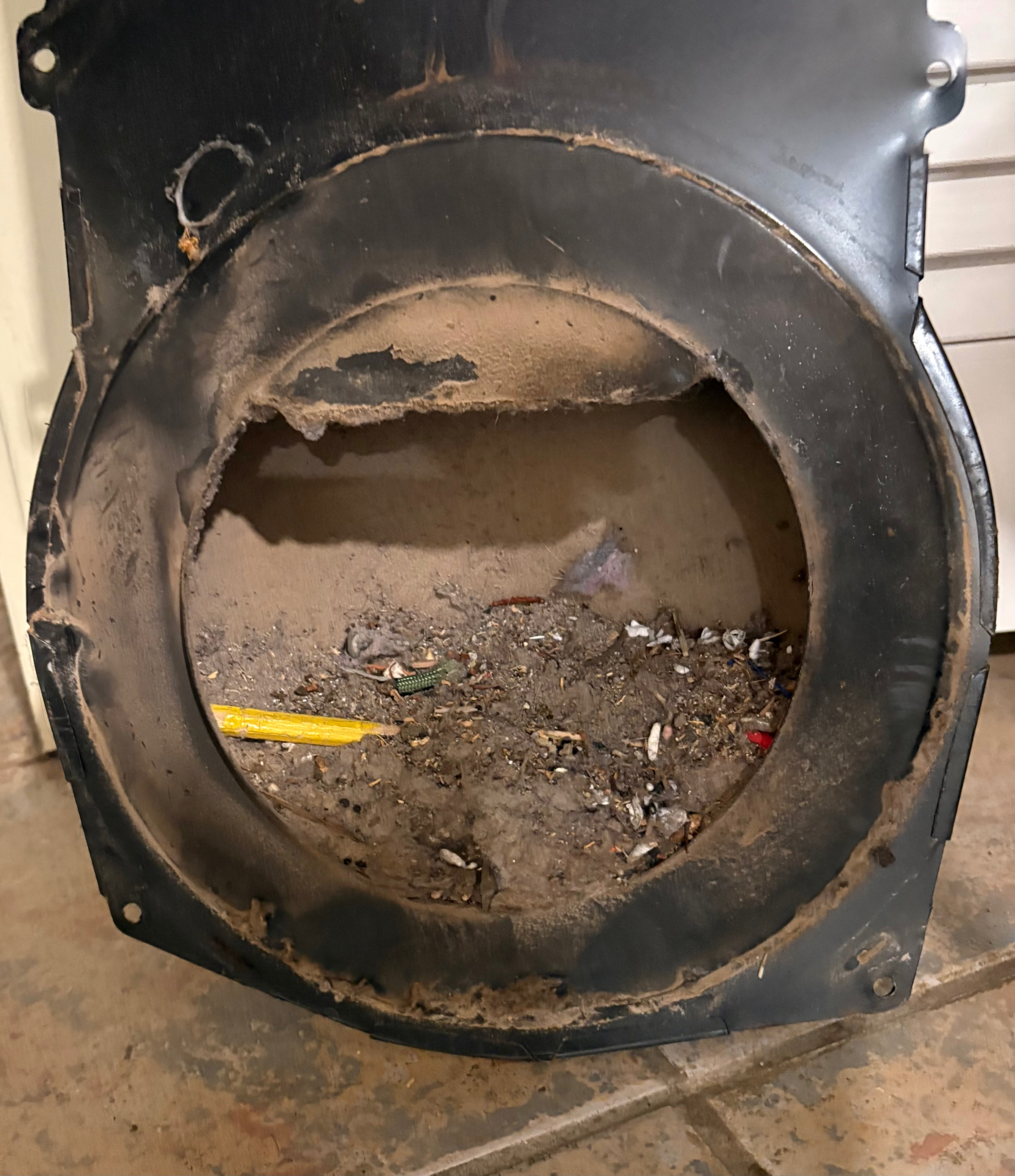
Debris packed in dryer blower cover
Problem found: The cover in front of the dryer blower wheel was packed with lint, dirt, and debris picked up from the laundry area.
Why it matters: Debris sitting in the blower housing restricts airflow out of the dryer, which means longer dry times, more heat buildup, and more strain on the motor and heating components. This kind of buildup is prevented by regular maintenance.
Work performed: The cover was removed and the blower housing cleaned out.
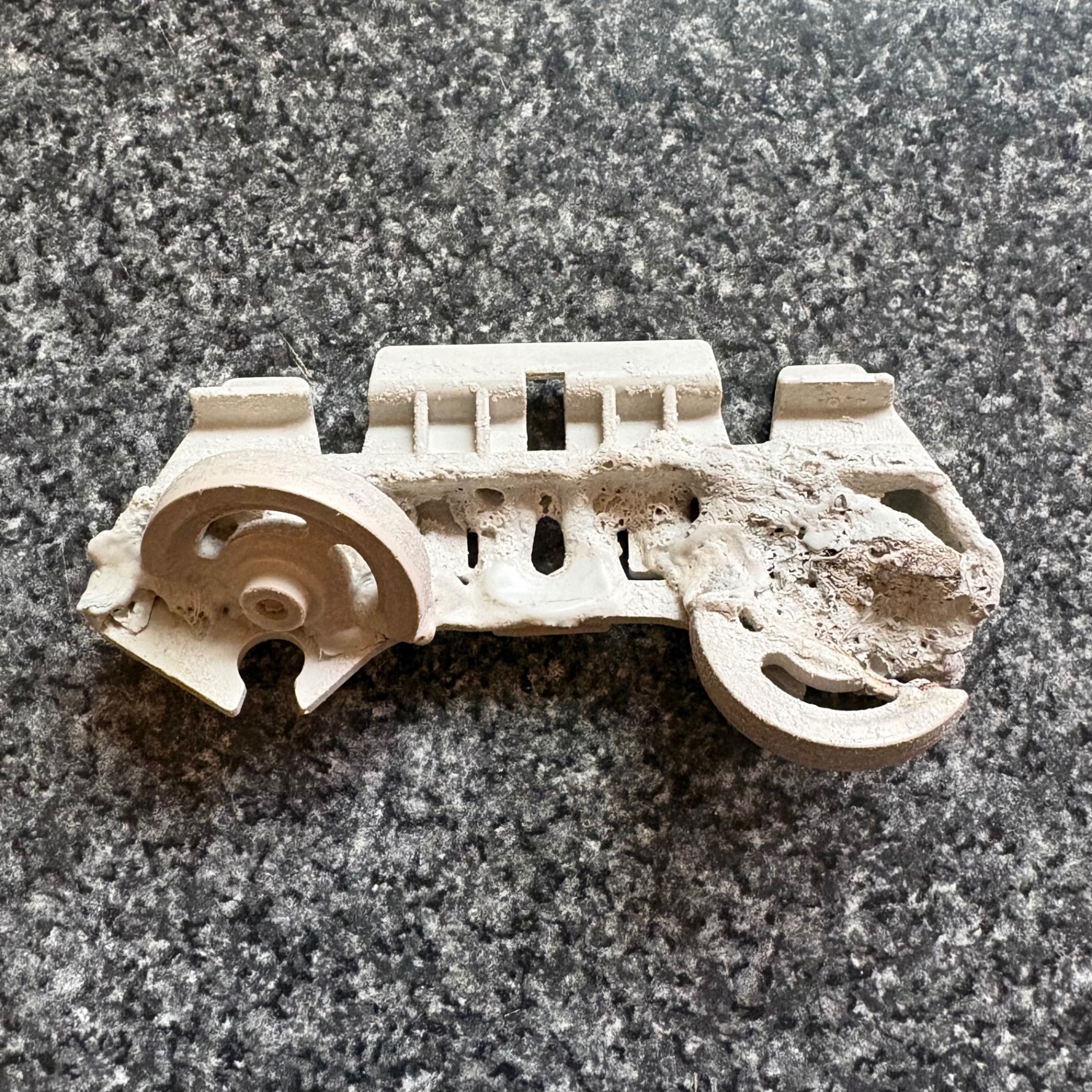
Melted dishwasher rack wheel that fell onto the heater
Problem found: A dishrack wheel came off the rack, fell onto the dishwasher's heating element, and melted.
Why it matters: A plastic wheel resting on a live heating element is a real fire hazard — it could have caught fire. The wheel was replaced with a new one, and the customer was advised to avoid overloading the rack so too much weight isn't resting on it at once.
Work performed: The melted wheel was removed and a new dishrack wheel was installed.
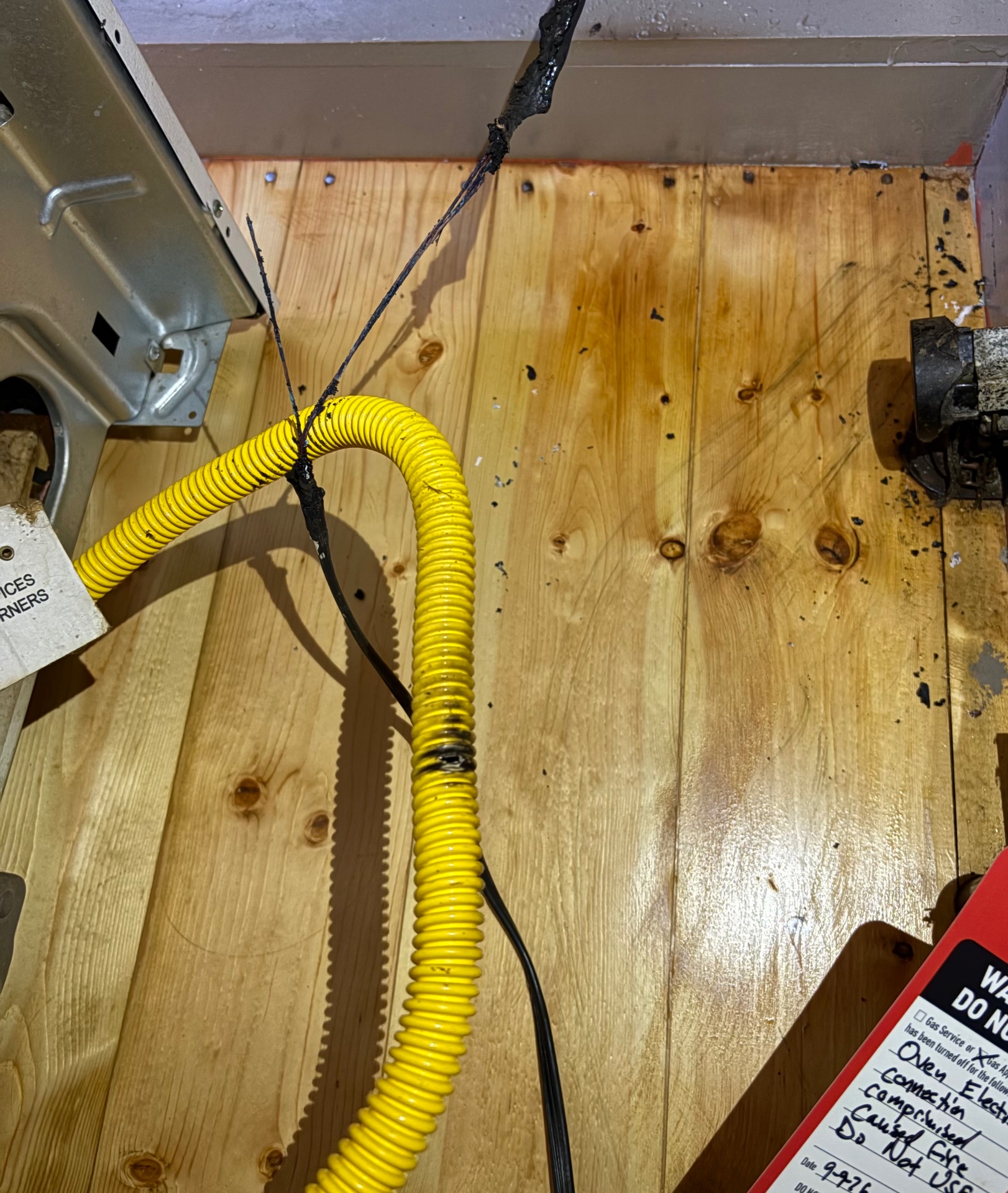
Melted range cord that damaged the gas line
Problem found: A range was plugged into an extension cord, then into the outlet. The machine's cord arced and melted, and also damaged and punctured the gas line.
Why it matters: An arcing, melted cord next to a punctured gas line is a serious fire and gas-leak hazard — this could easily have ended in disaster. Large appliances like ranges should always be plugged directly into a wall outlet, never through an extension cord. The gas line and cord were both replaced to make the installation safe.
Work performed: The damaged cord and punctured gas line were replaced, and the range is now connected directly to the outlet.
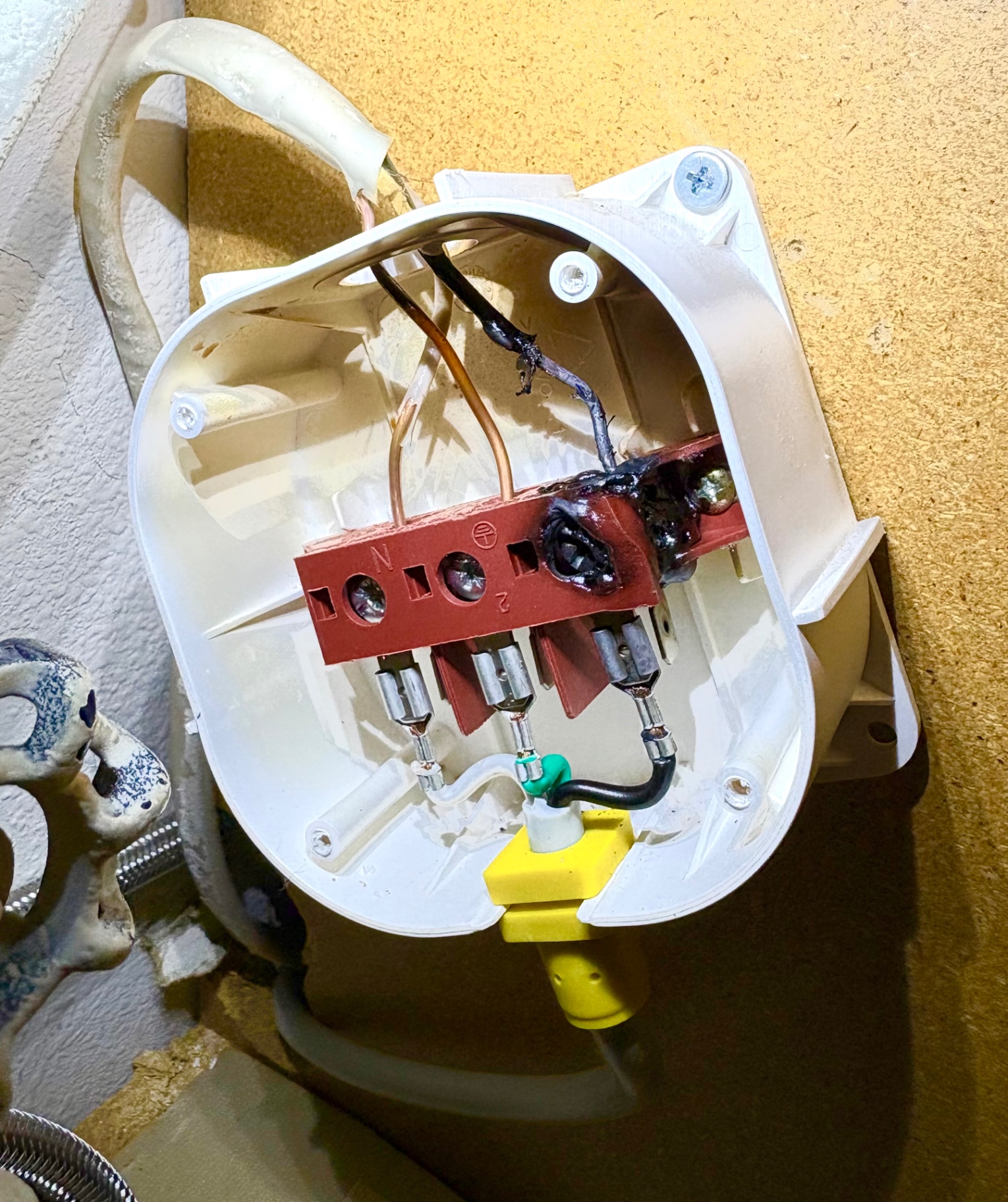
Burned dishwasher junction box
Problem found: The junction box that feeds power to a dishwasher was found burned at one terminal. The box was a cheaply made part that wasn't structurally sound, which let electricity flow where it wasn't meant to. The customer had reported a burning smell, and the scorched box is what it was coming from.
Why it matters: A terminal block that chars or melts means current is heating a connection that should stay cool. That heat keeps breaking down the terminals and wire insulation and can eventually ignite nearby material, so the appliance isn't safe to keep running. The failed box was removed and the dishwasher's power cord was connected directly to the power source.
Work performed: The burned junction box was removed and the dishwasher power cord was hooked up directly to the power source.
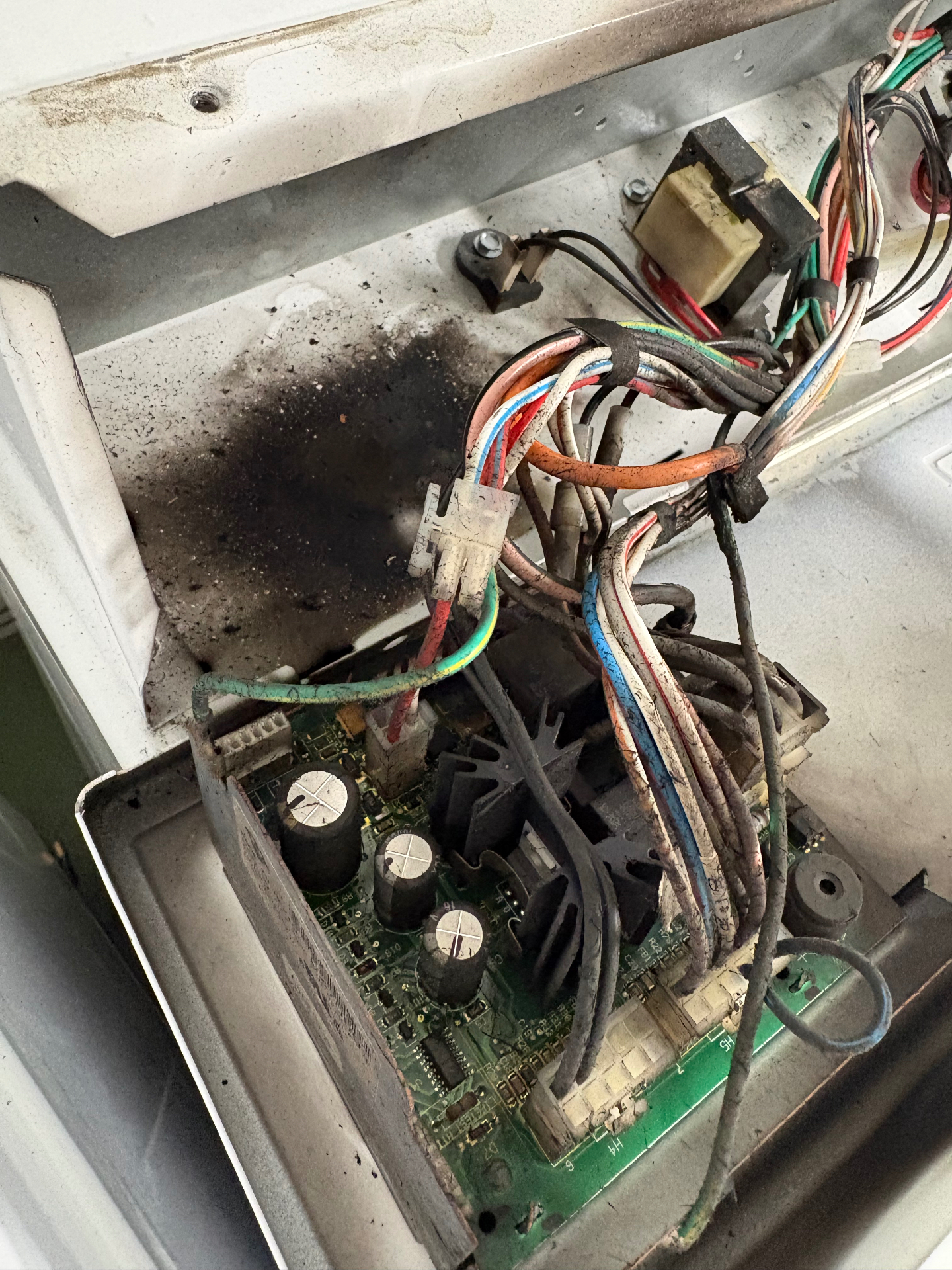
Blown washing machine control board
Problem found: The control board of a washing machine suffered a violent electrical failure, leaving soot and scorching across the board, wiring, and housing. The working theory is that a resistor fried, sending power somewhere it shouldn't have gone and causing the blowout.
Why it matters: A board that flashes over leaves damaged wiring and components behind, and the fault that caused it can happen again. This machine was deemed unsafe and replaced rather than repaired — the right call once an electrical failure has scorched the control electronics.
Work performed: The machine was deemed unsafe to repair and was replaced.
What you'll see in the gallery
Clogs and blockages
Washer drain-pump debris, dishwasher filter buildup, refrigerator drain blockage, dryer lint restriction, vent-hood grease buildup, and garbage-disposal blockage.
Safety hazards
Burned wiring, overheated terminals, damaged power cords, restricted dryer venting, leaking water lines, melted connections, and unsafe installation conditions.
Installation work
Proper appliance fitment, leveling, water-line and drain-hose routing, dryer-vent connections, and finished installation areas.
Wear and component failure
Failed bearings, broken belts, damaged rollers, cracked hoses, corroded parts, failed heating elements, and worn pumps.
Before and after
Blocked versus cleared drains, improper versus corrected installations, damaged versus replaced components, and unsafe versus corrected connections.
Preventive education
Model and serial tag locations, correct dryer-vent routing, clean versus restricted filters, proper appliance clearance, and normal versus excessive frost.
Customer privacy: Gallery photographs never include customer faces, children, addresses, mail, bills, payment information, phone numbers, license plates, private documents, or customer names.
See something familiar? Let's take a look at your appliance.
Submitting a service request does not confirm an appointment. Knapp's will review the information provided and contact you regarding service eligibility and scheduling. For confirmed service visits, Knapp's calls the evening before to provide a two-hour arrival window.